
Electric Boilers

Switch to a Smarter, Cleaner Home with Electric Boilers

Why Make the Switch?

Gas and oil are no longer the only ways to heat your home. With the volatility of oil prices and the growing shift toward a greener future, electric boilers have emerged as one of the most efficient, quiet, and low-maintenance alternatives for modern living.

Transitioning from fossil fuels to electric heating isn’t just about helping the planet, it’s about upgrading your home’s performance, reducing maintenance concerns, and potentially lowering your energy costs. As the electricity grid becomes greener through renewable sources like wind and solar, your heating becomes cleaner every year. Pairing an electric boiler with solar panels or a smart energy tariff also gives you greater control over both your energy usage and long-term sustainability, helping to future-proof your home.
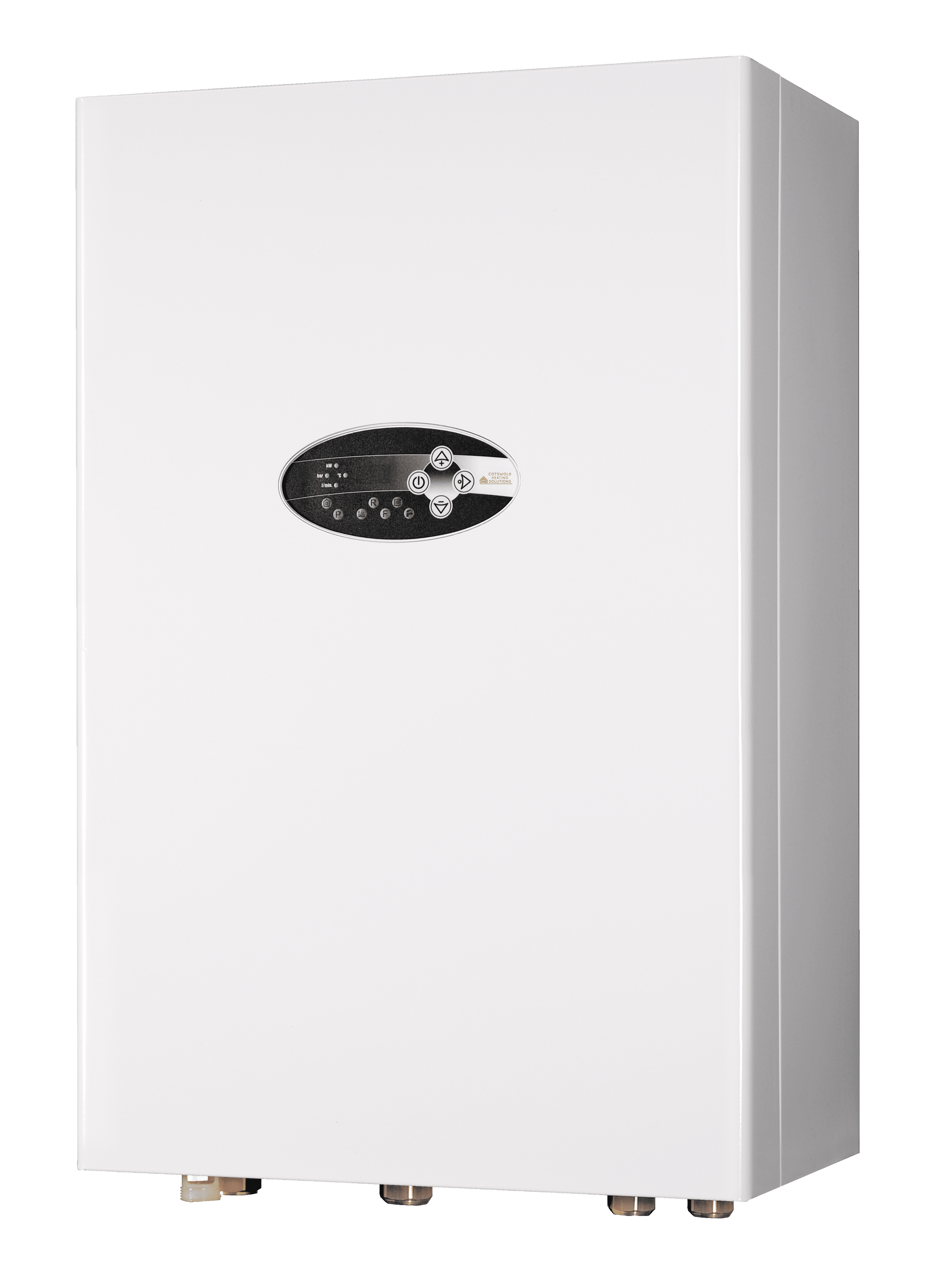
100% Efficiency
Unlike gas boilers that lose energy through waste gases, electric boilers convert every kilowatt of electricity into heat.
Whisper-Quiet Operation
With no combustion or moving parts, you’ll barely notice it’s running.
Zero Emissions at Home
Eliminate the risk of carbon monoxide leaks and reduce your household’s carbon footprint instantly.
Compact & Flexible
No flue or gas line required. You can install an electric boiler almost anywhere; under the stairs, in a cupboard, or even in a bedroom or attic.
Lower Maintenance Costs
Fewer moving parts mean fewer breakdowns. Forget annual gas safety certificates and expensive flue repairs.

What are the different types of electric boilers available?

There are three main types, each suited to different home sizes:
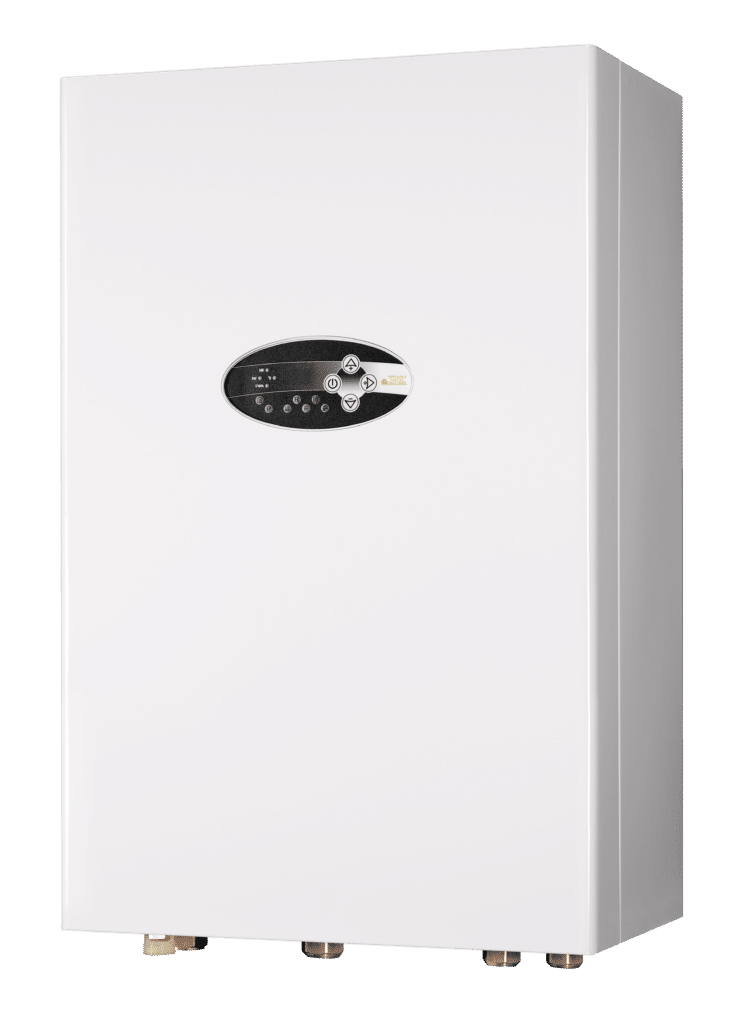
Electric Combi Boilers

Compact, all-in-one units that provide both heating and instant hot water without a separate cylinder.
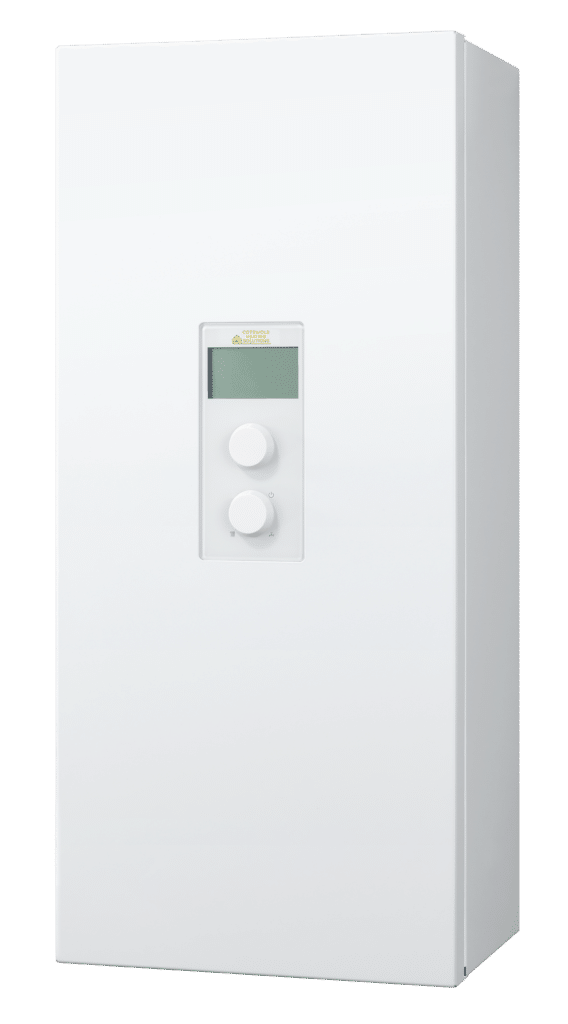
Electric System Boilers

These include internal pumps and expansion vessels but require a separate hot water cylinder/Sunamp Heat Battery.
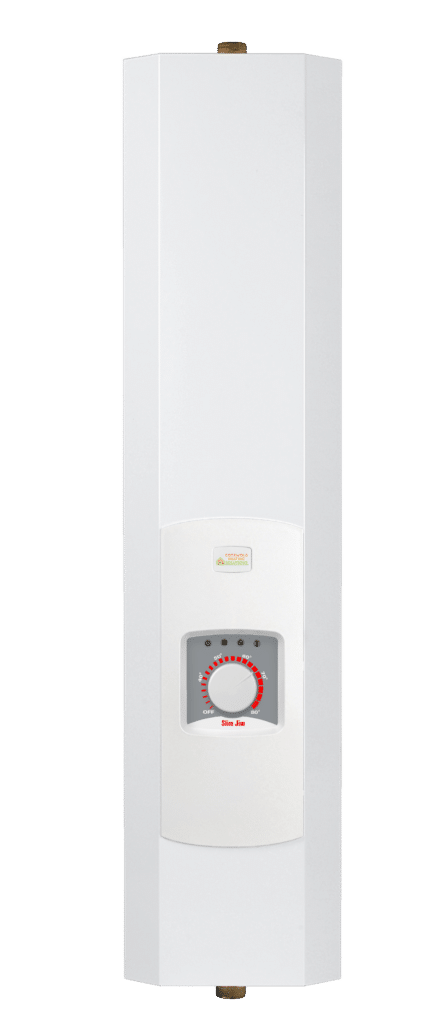
Heat-Only (Flow) Boilers

These are ideal for older homes with existing gravity fed systems (tanks in the loft), heating water for storage in a cylinder.

Future-Proof Your Heating

As the UK continues its transition toward renewable energy, your heating system should be ready for what comes next. Electric boilers are uniquely positioned to benefit from the rapid growth of wind, solar, and low carbon electricity, meaning your home will automatically become greener over time without needing further upgrades.

Future proofing your home is not just about sustainability, it is about long term flexibility and cost control. Electric heating systems are far easier to integrate with emerging technologies such as solar PV panels, battery storage, and smart home energy systems. This allows you to generate, store, and use your own electricity more efficiently, reducing reliance on the grid and protecting yourself from rising energy prices.

In addition, with increasing regulations around fossil fuels and the gradual phase out of gas boilers in new builds, installing an electric boiler now helps ensure your home stays compliant with future standards. Whether you are planning to stay long term or thinking about resale value, a low carbon heating system is becoming an increasingly attractive feature for modern buyers.

Pair your electric boiler with a smart tariff or renewable setup, and you gain greater control over when and how you use energy, turning your home into a more efficient, adaptable, and future ready space.

Electric vs Gas vs Oil Heating

Frequently Asked Questions

Do I need to upgrade my electrical supply for an electric boiler?
Most standard 6kW–14.4kW boilers run on a single-phase (230V) supply. However, for larger homes requiring 15kW+ units, our free home visit will be able to identify if an increase in electrical supply is required.
Can an electric boiler work with my existing radiators and pipework?
Yes. Electric boilers are designed to integrate seamlessly with standard "wet" central heating systems, including radiators and underfloor heating. In most cases, you can simply swap the boiler unit without replacing the entire network of pipes.
How do running costs compare if electricity is more expensive than gas?
While the unit price of electricity is currently higher than gas, electric boilers offset some costs through 100% efficiency (no heat lost through a flue) and zero mandatory annual service fees. To further reduce costs, many users pair their boiler with solar PV panels or off-peak tariffs like Economy 7.
Is an electric boiler powerful enough for a large 4-bedroom house?
Electric boilers are highly effective for small-to-medium properties. For larger homes with high hot water demand, we recommend a System Electric Boiler paired with a Sunamp Heat Battery (see Sunamp Hot Water) to ensure you never run out of water during peak times.
What happens to the heating if there is a power cut?
Like modern gas and oil boilers (which require electricity to run their internal pumps and electronics), an electric boiler will stop operating during a power cut. However, well-insulated homes will retain heat for several hours.
Can I keep my existing radiators?
Yes, electric boilers are fully compatible with standard "wet" central heating systems, including existing radiators and underfloor heating. A professional system power flush is often recommended before installation to ensure maximum efficiency.
What are the electrical supply requirements?
Most UK homes have a single-phase supply (60-100 amps), which can support boilers up to roughly 14kW. Larger properties requiring 15kW+ may need a three-phase upgrade. A dedicated circuit with its own miniature circuit breaker (MCB) or RCBO is always required, usually as part of a dedicated consumer unit (fuseboard).
Are electric boilers really 100% efficient?
Yes. While gas boilers lose energy through exhaust gases (typically 90-94% efficient), electric boilers convert nearly 100% of the electricity they consume directly into heat.
How can I manage the higher cost of electricity?
To offset higher unit prices compared to gas, many homeowners use time of use tariffs, which provide cheaper electricity during off-peak hours. Pairing the boiler with solar PV panels and battery storage can also significantly reduce grid dependency.
How long do electric boilers last?
Due to having fewer moving parts than gas or oil systems, a well-maintained electric boiler can last between 15 and 25 years.
Do they still need annual servicing?
While they don't require gas safety certificates, annual inspections are still recommended to check safety valves, internal wiring, and the expansion vessel to maintain the manufacturer's warranty and peak performance.
What if I live in a hard water area?
Limescale can build up on heating elements over time, reducing efficiency. Installing a magnetic filter and scale reducer is highly recommended to protect internal components in hard water regions.
Is an electric boiler safer than gas?
Significantly. Because they don't burn fuel, there is zero risk of carbon monoxide poisoning or gas leaks.